

Speech Pathology Referrals You're in the right place
We make it clear, practical, and collaborative.
Word Stars provides neurodiversity-affirming speech pathology with clear goals, measurable outcomes, and clinically useful feedback to support shared care.
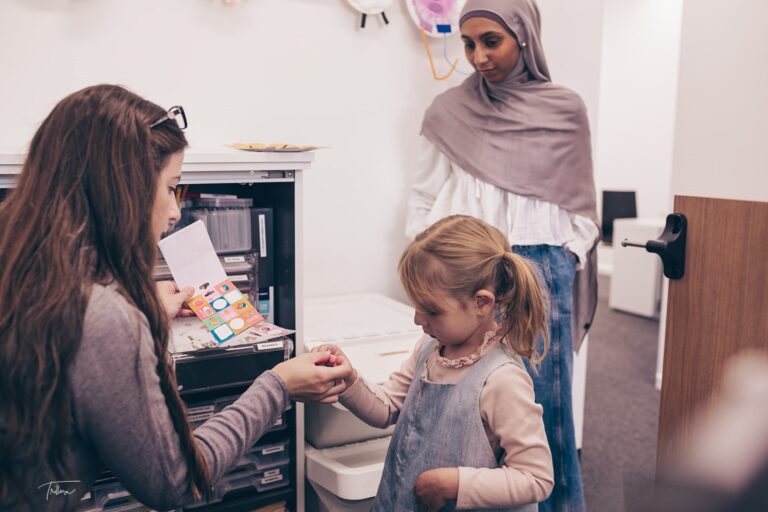


Referring a child
Clinicians at Word Stars work with children presenting with specific communication difficulties, including:
Late Talking and Early Language Delay
Support for children who are not yet talking or who are using fewer words than expected for their age.
Stuttering and Fluency Differences
Assessment and support for children who experience disruptions to the flow of speech, such as stuttering.
Speech Sound Difficulties
Intervention for children who have difficulty pronouncing words clearly or are hard to understand.
Language for Mathematical Reasoning
Support with understanding and using the language needed to solve word problems and explain mathematical thinking.
Narrative and Expressive Language Skills
Support with telling stories, describing events, and sharing information about daily experiences.
Social Communication and Peer Interaction
Support for children who find it challenging to make friends, join in play, or navigate social interactions.
Getting Ready for Kindergarten
Support to build the communication, language, and early learning skills needed for a successful transition to school.
Early Reading and Literacy Skills
Support for developing foundational reading skills, including phonological awareness, decoding, and early literacy.
Reading Comprehension and Learning from Text
Support for children who can read words but have difficulty understanding and learning from written texts.
Communication Systems and AAC
Support to develop effective and reliable communication systems, including augmentative and alternative communication (AAC), to enable children with complex communication needs to express themselves, participate, and be understood.
For the following presentations we often refer to a different service.
The services listed below are provided as examples of commonly used referral pathways and do not represent a formal partnership or endorsement.
Feeding (e.g. picky eaters and swallowing difficulties)
Melissa Compton: Speech Pathology
You can also visit the Speech Pathology Australia Website and Find a Speech Pathologist
Primary Behavioural or Emotional Concerns
Presentations where behaviour or emotional regulation difficulties are the primary concern, and are not primarily related to underlying communication or language differences.
Referral is often best directed to a psychologist or mental health professional or an occupational therapist (OT) for:
OT for Kids – Occupational Therapists
John Blythe Child Psychology (Blacktown & Macarthur)
PSYCHSTUFF4KIDS – Help without judgement
Where communication differences are contributing to behaviour, speech pathology support may still be appropriate.
Voice disorders: ENT-led assessment and specialist voice services
Cate Madill
You can also visit the Speech Pathology Australia Website and Find a Speech Pathologist
NDIS Support Coordination and Plan Navigation Assessment and reporting to support access to services
Absolute Best Care: Support Coordination ABC Hub | Westpoint
Referring a teenager
We support teenagers whose language and communication difficulties impact learning, independence, and transition to adulthood. Clinicians at Word Stars work with teenagers presenting with specific communication and language difficulties, such as:
Secondary School Transition Support
Communication and language support to assist with the increased academic, organisational, and social demands of high school.
Written Expression and Extended Texts
Support with planning, organising, and producing longer written texts, including essays and structured responses.
Adolescent Literacy Difficulties
Support for foundational literacy skills, including reading accuracy and spelling.
Reading Comprehension of Extended Texts
Intervention targeting understanding and analysing longer, more complex curriculum texts across secondary subjects.
Transition to Employment and Vocational Readiness
Communication support for work readiness, including workplace language, self-advocacy, and functional communication skills.
Communication Systems and AAC
Support to develop effective and reliable communication systems, including augmentative and alternative communication (AAC), to enable teenagers with complex communication needs to express themselves, participate, and be understood.
Neurodiversity-Affirming Communication Support
Strengths-based support to help teenagers understand their communication profile, build confidence, and develop effective strategies.
For the following presentations we often refer to a different service.
The services listed below are provided as examples of commonly used referral pathways and do not represent a formal partnership or endorsement.
Primary Behavioural or Emotional Concerns
Presentations where behaviour or emotional regulation difficulties are the primary concern, and are not primarily related to underlying communication or language differences.
Referral is often best directed to a psychologist or mental health professional such as:
John Blythe Child Psychology (Blacktown & Macarthur)
PSYCHSTUFF4KIDS – Help without judgement
Where communication differences are contributing to behaviour, speech pathology support may still be appropriate.
Stuttering support for teens who experience disruptions to the flow of speech
Voice disorders: ENT-led assessment and specialist voice services
Cate Madill
You can also visit the Speech Pathology Australia Website and Find a Speech Pathologist
NDIS Support Coordination and Plan Navigation Assessment and reporting to support access to services
Absolute Best Care: Support Coordination ABC Hub | Westpoint
Referring an adult
Clinicians at Word Stars work with adults presenting with specific communication difficulties, including:
Adult Literacy and Reading Difficulties
Including lifelong or late-identified difficulties
Transition to Employment
Communication support for study, training, and workplace participation
Functional Information Literacy
Support with understanding and using everyday information, including navigating websites, managing personal and financial information, and understanding privacy and consent.
For the following communication and swallowing presentations we often refer to a different service.
The services listed below are provided as examples of commonly used referral pathways and do not represent a formal partnership or endorsement.
Stroke and complex acquired brain injury
Lisa Forbes 0412 525 670
You can also visit the Speech Pathology Australia Website and Find a Speech Pathologist
Swallowing (dysphagia)
Lisa Forbes 0412 525 670
You can also visit the Speech Pathology Australia Website and Find a Speech Pathologist
Stuttering support for adults who experience disruptions to the flow of speech, such as stuttering
Voice disorders: ENT-led assessment and specialist voice services
Cate Madill
You can also visit the Speech Pathology Australia Website and Find a Speech Pathologist
NDIS Support Coordination and Plan Navigation Assessment and reporting to support access to services
Absolute Best Care: Support Coordination ABC Hub | Westpoint

By booking with WSSP, you agree to our privacy policy and our terms and conditions.
© 2026 Word Stars Speech Pathology. All Rights Reserved.